On retirement, loneliness, and the lives we build around being expected.
For much of a working life, retirement presents itself as a promise about time. Eventually, the hours will belong to us. We will read the books, take the walks, visit the places, and attend to the interests that have survived for years on whatever attention was left over.
The promise is reasonable. There are people who reach retirement exhausted, and whose first experience of it is an immense relief. The freedom to rest, especially after years of work that has worn someone down, needs no further justification.
But having a day in which you can do anything you want is different from having that freedom every day.
A day off has a place in a larger arrangement. It interrupts something. Other days contain demands, appointments, people who expect an answer. The free day arrives with its meaning partly supplied. You can spend it doing very little and still feel that you have done exactly what was needed.
When the calendar opens indefinitely, the arrangement changes. There is less to interrupt. The responsibility for giving the day a shape passes increasingly to the person living it.
This can be welcome and unsettling at the same time. You can be grateful to have left a job and still miss parts of the life that surrounded it. You can enjoy an afternoon alone and find the prospect of another one difficult.
Retirement is an unusually clear occasion for discovering how many things a single role has been doing.
A job provides an income, of course, but it may also provide company, recognition, intellectual effort, a reason to leave the house, and an answer when someone asks what you do. Even the parts we complained about can have supported something we valued. A meeting could be tedious and still put us among people who knew us.
We do not necessarily recognize these contributions separately while they are arriving together. Their absence can first register as a general uneasiness. Something is missing, although the days may be comfortable and full.
There is a particular kind of companionship in recurring participation. People become familiar because you keep encountering them. An exchange that would hardly qualify as a social event—a few minutes before a meeting, a conversation while putting things away—can accumulate into a relationship. You learn what someone worries about. They remember something you said last week.
After retirement, contact may require more deliberate arrangement. Someone has to suggest a visit, settle on a time, make the journey. Each encounter can be worthwhile, yet the effort of arranging it is different from belonging to a setting in which contact happens along the way.
This may help explain why keeping busy can leave a person lonely. A project can absorb the mind and give real satisfaction while leaving the need for company largely untouched. There may be plenty to accomplish and very little occasion to be among other people.
Routine helps sustain that occasion. It carries a commitment forward so that its value does not have to be reconsidered every morning. A class meets on Wednesday. A group gathers to rehearse. A friend expects a walk. The decision has already been made, and other lives have made room for it.
Being expected gives a person a place in someone else’s week. Their absence would be noticed. That is a modest form of belonging, but it can matter greatly.
To acknowledge this is also to confront the question of identity. For years, we acquire descriptions of ourselves: teacher, supervisor, editor, colleague, the person who knows how something works. We acquire histories with others who can confirm those descriptions. They have seen us do the work. They remember who we were before we became good at it.
When those settings disappear, the identities can become harder to inhabit. The ability may remain. So may the interest. What changes is the ordinary opportunity to exercise them and have them recognized.
There can be grief in this, even when retirement was freely chosen. A person may have spent decades becoming capable of a particular kind of work. Leaving it can mean losing access to a way of being that was difficult to acquire and satisfying to practice.
It is tempting to describe later life as a movement from acquisition toward shedding. Roles fall away. Possessions become burdensome. Some ambitions lose their urgency; others become impossible. The question of what remains begins to feel less abstract.
There is truth in that description, although it can harden into a story that leaves too little room for the life still taking place. New attachments remain possible. So do new interests, responsibilities, and forms of affection. Loss does not tell us in advance how much of the future it will occupy.
Nor is there any guarantee that shedding our roles will reveal a final, uncomplicated self underneath them. Those roles helped form us. Years of teaching, caring, making, or organizing leave habits of attention that continue after the formal occasion has ended. What remains may include much of what we thought we had left behind.
The uncertainty deserves some patience. That advice, however, needs an explanation. It is easy to tell someone to allow an experience when you are not the one having it.
One reason for patience is that the feeling and the judgment about the feeling can become tangled. Loneliness may be accompanied by the conviction that one ought to be enjoying this freedom. Sadness can acquire an accusation: you have been given time, and you are failing to appreciate it.
There is some evidence for the value of loosening that judgment. In a paper published in 2018, Brett Ford and colleagues found that people who habitually accepted their thoughts and emotions without judging them experienced less negative emotion during stressful situations. A diary and follow-up study linked this pattern with better psychological health six months later. The studies examined existing tendencies toward acceptance; they did not establish that advising someone to accept their feelings would produce the same result.
The relevant distinction was between accepting one’s internal experience and accepting one’s circumstances. Acknowledging loneliness leaves a person free to seek company. It can make it easier to admit what is wanted without first having to defend the wanting.
Another reason for patience is that experience can clarify what has been lost. An absorbing afternoon may reveal that intellectual engagement is still available. A brief conversation afterward may reveal how much ordinary company has been missed. Relief provides information, as does the return of uneasiness.
Time offers opportunities for these distinctions to become clearer. It also offers opportunities to change the conditions of a day. Waiting by itself promises very little.
Research on retirement gives reason to be cautious about declaring any single emotional response inevitable. A longitudinal study of 1,456 German retirees found different patterns of life satisfaction: an initial decline followed by stability or improvement, an initial rise followed by decline, and a third pattern with only a small temporary rise. The findings leave little basis for treating the first reaction as a reliable forecast of the rest of retirement.
They also leave room for a less dramatic experience. A life can continue across retirement with much of its meaning intact. No crisis of identity is required.
The practical question, for someone who does feel an absence, is what kind of engagement would answer it. This calls for more precision than the general instruction to find something to do. Companionship, responsibility, recognition, and intellectual effort are related needs. An activity may satisfy one while doing little for another.
There is dignity, too, in being able to rest without earning permission through usefulness. Retirement should allow some release from the demand to justify every hour. A person deserves affection and company on days when nothing has been accomplished.
Yet freely chosen responsibilities can have a value that becomes more apparent when imposed responsibilities recede. Having a say in what we undertake, how much it asks of us, and whom we undertake it with can make commitment part of the pleasure of retirement.
A small recurring obligation can give a week continuity. It can bring us into contact with people whose concerns gradually become familiar. In time, there may be a shared history where there was once only an appointment.
Perhaps this is one of the things an open calendar makes visible: how much a life has depended on occasions for returning. We return to people, to a place, to work we care about. Each return saves us from having to begin the day entirely on our own.
The afternoon can still be ours. On Wednesday morning, someone is expecting us.
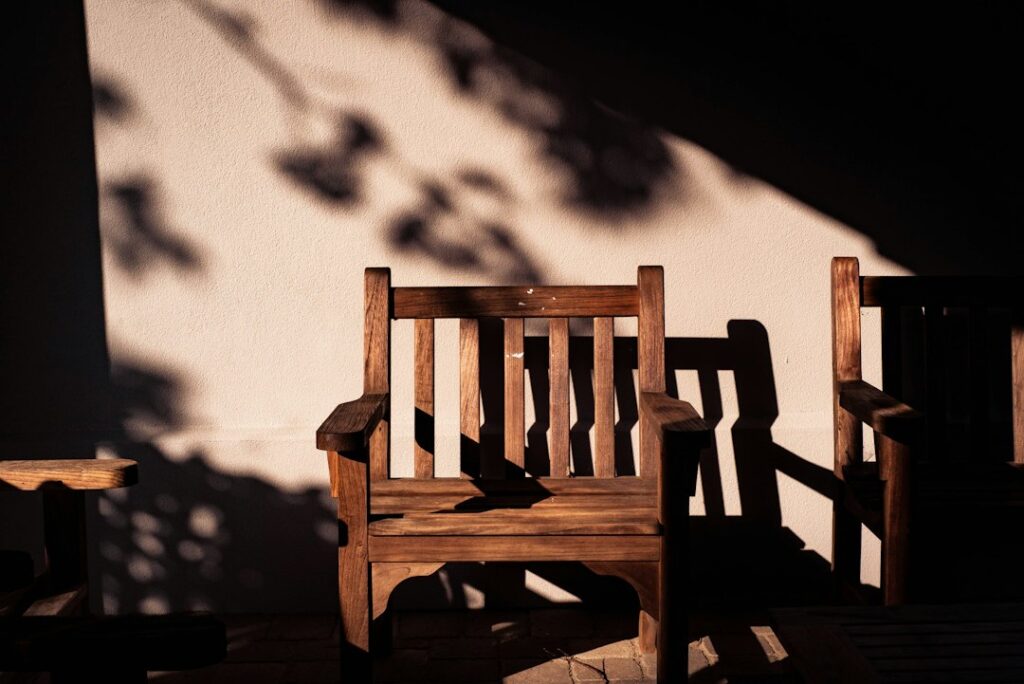
Photograph by Griest Projects / Unsplash.
Sources: Brett Q. Ford, Phoebe Lam, Oliver P. John, and Iris B. Mauss, “The Psychological Health Benefits of Accepting Negative Emotions and Thoughts: Laboratory, Diary, and Longitudinal Evidence,” Journal of Personality and Social Psychology, 115(6), 2018, 1075–1092. Martin Pinquart and Ines Schindler, “Changes of Life Satisfaction in the Transition to Retirement: A Latent-Class Approach,” Psychology and Aging, 22(3), 2007, 442–455.