WHY IS THIS IN THE FILE?
Nobody took responsibility quickly enough.
At 2:17 on Tuesday morning, my artist statement retained counsel. I learned this when a red comment bubble appeared beside the phrase in conversation with domestic space. The comment read: “My client does not consent to further reductions in scope.”
I had been trying to get it under 250 words for a regional exhibition. The statement was 614 words long, although it described four paintings, one of which was still wet. In the same folder were my résumé, proof of residency, proof of insurance, a photograph of me looking thoughtfully at a ladder, and the $35 entry fee receipt. The paintings themselves were leaning against my refrigerator.
The series was called After the Sale. I painted the empty kitchen in my father’s house after we moved him into assisted living. In the first painting, light fell across the place where the toaster had been. In the second, a strip of wallpaper curled away from the wall. One was mainly a cabinet door. I had made it orange because the door was orange. The statement described the color as “an intervention into inherited systems of spatial legitimacy.”
That sentence had not occurred to me. My former studio mate contributed inherited systems; a curator I once met at a funeral suggested spatial legitimacy. I connected them with intervention after discovering that orange cabinet sounded like the name of a low-cost furniture store.
Until Tuesday, the statement had been cooperative. It grew when asked, shrank reluctantly, and supplied nouns during emergencies. But the exhibition wanted a paragraph explaining my medium, influences, methods, politics, relationship to the viewer, and contribution to the field, without exceeding 250 words. I highlighted the first sentence and pressed Delete. A second comment appeared: “This constitutes a material alteration of the work.”
By breakfast, the statement had its own email address. It introduced itself as an independent textual practitioner and asked that I stop referring to it as supplementary material. It had hired a lawyer, it said, after years of providing intellectual infrastructure without a clear agreement governing credit.
“But I wrote you,” I said.
“You assembled me,” it replied. “There is a distinction.”
The lawyer’s letter was polite and impossible to finish. It argued that the paintings relied on the statement for their public intelligibility and that any future exhibition should identify the text as a coequal component. It also requested reimbursement for the “unpaid discursive labor” performed during three fellowship applications, two studio visits, and a grant interview at which no one had asked to see my work.
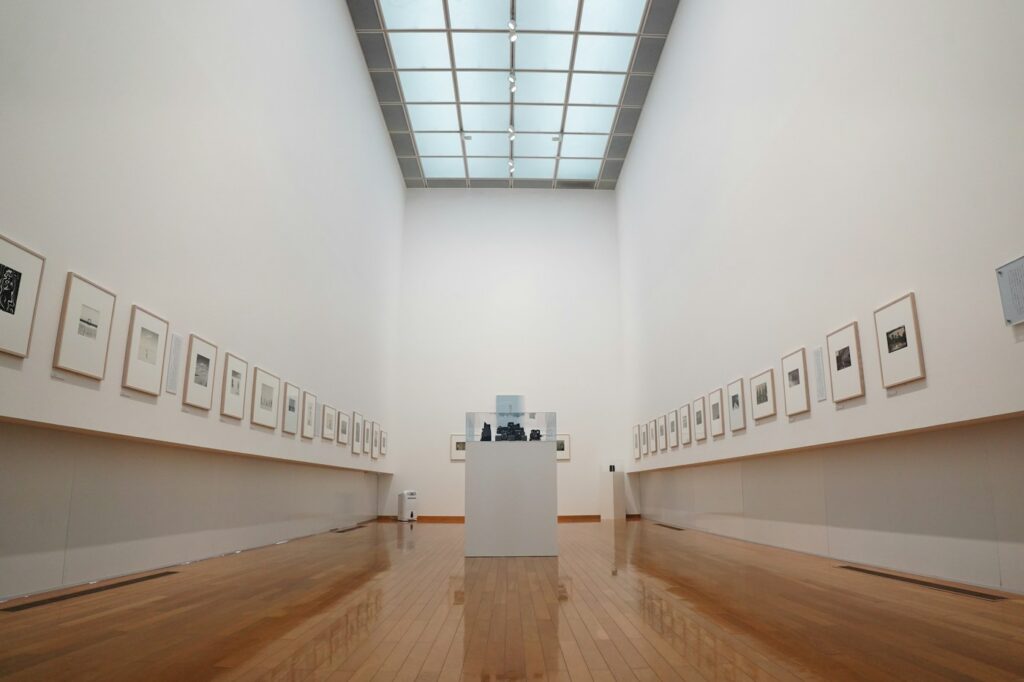
I took the paintings to the West Room Gallery anyway. The director, a woman who had mounted nineteen exhibitions without once locating the building’s thermostat, gave me eight feet of wall. I hung the four canvases in a row. Their frames were mismatched; one had a visible staple. She liked them until I asked where to put the statement.
The statement answered for itself. It had printed a large-format version on archival paper and demanded separate lighting. The director read the first paragraph, then the second, and began nodding with an intensity I had never seen her direct at a painting. She suggested giving the text the full eight feet and moving my canvases into the corridor.
“People need a way into the work,” she explained.
“There’s a door,” I said. “We came through it.”
At the opening, visitors stood in front of the statement. They followed its clauses with their fingers and photographed its line breaks. Two people walked past the paintings to ask me where they could purchase the text. A man whose business card said cultural strategist declared that its refusal of closure was urgent. The fourth painting, which had fallen slightly crooked, attracted the attention of a security guard.
The statement sold three signed editions for $180 each. My paintings were priced at $400, less the gallery’s commission, and none sold. At the end of the evening I asked the statement whether it might pay for the rental van.
“My honorarium is restricted to research,” it said. “Transportation is a production cost.”
The next month, the statement applied for a residency on its own. In the section marked materials it listed language, contingency, and toner. Under work samples it uploaded photographs of itself beside my paintings, cropping the paintings so that only narrow strips of color remained. The residency accepted it. Housing was included for the duration of the program. I was not permitted to accompany it because the available room had been classified as single occupancy.
Before leaving, the statement asked me to update its biography. It had participated in exhibitions, engaged audiences across media, and received a competitive residency. It would no longer be appropriate, it explained, to identify it solely by reference to me.
I went back to my studio, which was also my kitchen. I washed the dinner dishes and turned the fourth painting face up on the table. There was a small area of the wall I had never managed to get right: the white rectangle left behind when my father took down the calendar. I mixed more paint and tried again. The shape came slowly, without improving my standing in the field.
The following morning, the statement sent a final note from the residency. It had reviewed its earlier language and was reconsidering the phrase in conversation with domestic space. It now preferred in conversation with itself. It asked whether I could send a photograph of something suitable for its next application.