Your Instructor Is No Longer an Authorized User
Her classes are still running, grades are due, and the college has deleted the only person who can enter them.
WHY IS THIS IN THE FILE?
Nobody took responsibility quickly enough.
At 12:01 a.m. Monday, the college removed Dr. Lena Hart from its list of authorized persons. It was not an act of discipline. Her contract had ended at midnight. Her students, who still had three days to receive their final grades, continued to exist.
Lena discovered the change while attempting to grade a paper about the invention of the washing machine. She had reached the sentence “This changed everything for women, although probably not all women,” which she considered promising. Then the screen went white and asked her to log in.
She logged in. The screen asked her to log in.
After the third attempt, she received a useful explanation: ACCOUNT NOT FOUND.
She had taught at the college for nine years, although Human Resources preferred to think of this as eighteen brief and unrelated visits. Each semester brought a new contract, a new security training, and an email welcoming her to the faculty as if she had just arrived from another continent. She could teach a student to distinguish evidence from assertion in forty-five minutes. She could not establish that she herself had ever been employed.
The spring contract had paid $3,130 for one course. The college referred to this as a competitive rate, although no one had identified the competition. She had taught two sections and spent more time commenting on drafts than she wished to calculate. She had calculated it once. The results had interfered with dinner.
At 7:48 a.m. she called the help desk. A man named Kevin explained that the system could not restore her account without confirmation from her department.
“Can you email the department for me?” she asked.
“From your college address?”
“That’s the account you turned off.”
Kevin was sympathetic. He offered to send instructions for regaining access to her college address.
Her department chair was attending a three-day retreat on institutional belonging. The retreat’s opening session, according to an agenda Lena found on the public website, was called Making Every Voice Count. It required preregistration and an active employee account.
At 9:12, the registrar emailed her personal address asking why grades had not been entered. The message stressed the importance of timely feedback. Underneath, in smaller type, was a confidentiality warning instructing her not to discuss student records over personal email.
She called the registrar. A cheerful woman suggested sending the grades to the department as a spreadsheet. Lena asked how she should get the names and ID numbers from the learning system. The woman put her on hold while a recording assured her that student success began with a connected campus.
The hold music was an acoustic guitar performing something adjacent to hope.
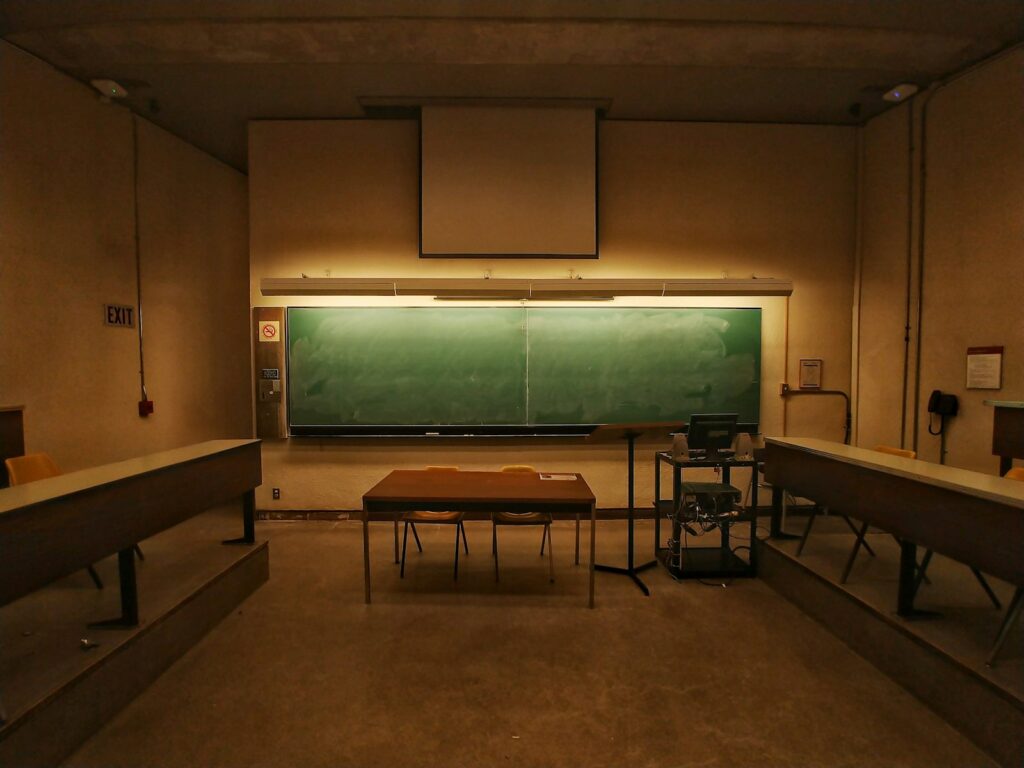
At eleven, Lena drove in. Her parking pass had also expired, so she paid twelve dollars to retrieve the essays she had left in a cabinet. The classroom was locked. Inside, visible through the window, was the last thing she had written on the whiteboard: A good argument makes room for objections.
The security officer was apologetic. He could admit her if she produced a faculty ID and her supervisor’s authorization. Her ID still had a photo. It had stopped being a faculty ID twelve hours earlier. The officer explained that the picture was not the problem.
“What if I’m a student?” she asked.
“Students use the east entrance.”
She walked to the east entrance. Students could enter with a current student card, which she did not have. On a notice board, the college advertised a workshop called Breaking Down Silos. She had never before wanted to break down one physically.
At noon, an email arrived from the Office of Faculty Excellence inviting her to complete a survey about her employee experience. The first required question was Are you currently employed here? Selecting No ended the survey with a message thanking her for her interest.
By three, her students had begun finding her elsewhere. One left a message through LinkedIn asking whether the final draft should contain a works-cited page. Another found an old conference program with her phone number. A third, who had missed five weeks while caring for his father, sent her a photograph of the printed essay he could no longer upload. It was not a very good photograph. She could read the first page if she held the phone sideways.
She answered them from the kitchen table. She explained citations, suggested revisions, and told the third student that his introduction had finally found its subject. None of these exchanges entered the college’s teaching-effectiveness metrics.
At 4:06 p.m., a department secretary called. Temporary grading access might be possible, but first Lena would have to complete the current cybersecurity training. The training lived behind the login screen. The secretary promised to look into it after the retreat.
The college had already posted the summer course schedule. Her two prospective sections appeared on the timetable under the name Staff. She was told this was normal: enrollment would determine whether the courses ran and whether she would be rehired. Until then, the college could make no commitments. It was important, however, that she keep those Tuesday and Thursday mornings available.
On Wednesday afternoon, Lena sat in a coffee shop with fifty-two drafts, a pencil, and a parking receipt. She graded what she could. The barista asked what she did for a living. “That’s under review,” she said.
That evening, her former students received an automatic message from the learning system: Your instructor is here to help you succeed. Book an office-hour appointment today.
The appointment calendar still worked. It offered Tuesdays and Thursdays, in fifteen-minute increments, through December 2031.
Vic Sloane
Vic Sloane covers nightlife, galleries, clothes, vanity, and the social uses of bad taste. Editorial standards are high here, either that or the chief editor is just a dick. Und du kannst mich am Arsch lecken, Lester!
STATUS: UNRULY
“Normal” was considered and rejected.
KNOWN ASSOCIATES: readers, loiterers, people who should know better.
PUSH THE WEIRD BUTTON
A clerk has been notified. They are furious.